
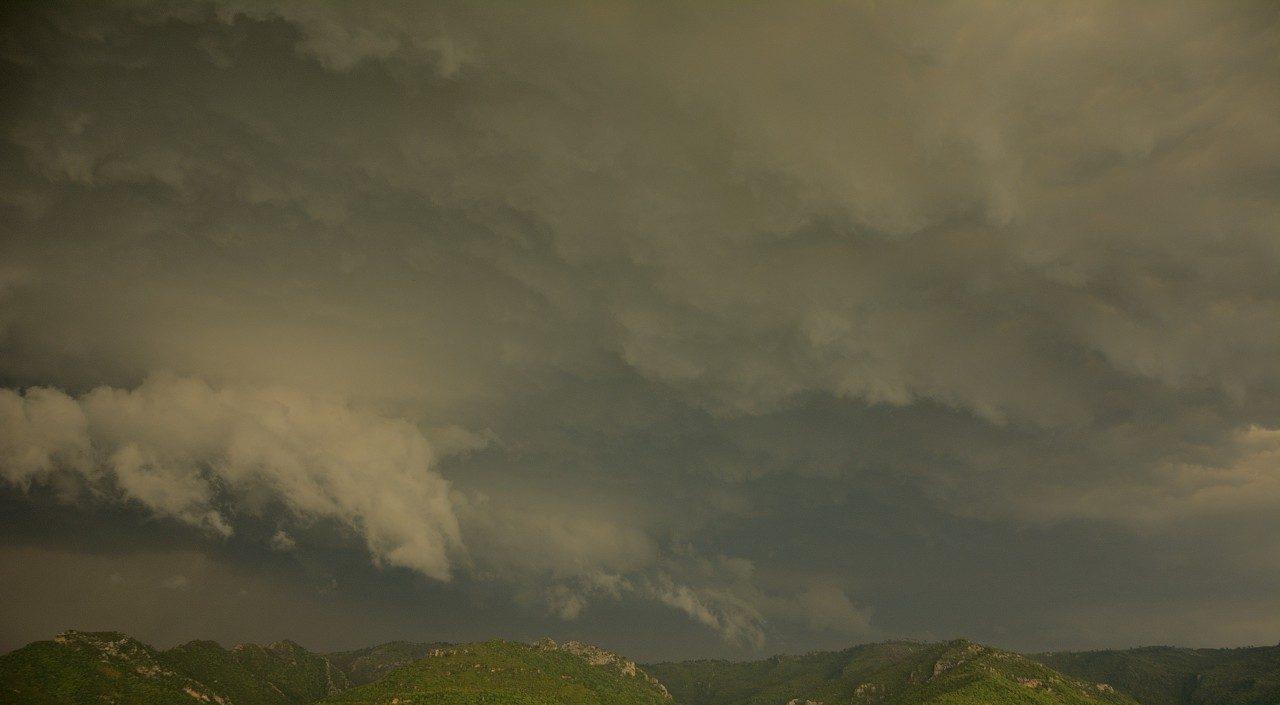
Thick cloud envelopes the Margalla Hills, north of Islamabad
I Have Control!
Paying attention to pilot intervention
Introduction
Just above the Pir Sohawa Road in the Margalla Hills north of Islamabad is a solemn memorial - a wall inscribed with the names of every person who lost their life in a tragic air accident in 2010. There are also names on plaques next to growing saplings in the memorial grounds. It’s a beautiful place with a sad purpose, to never forget. It serves as a reminder of the ultimate cost; that apart from being just one of several fatal air accidents that year, it was a tragic and premature end to 152 human lives. This article tells part of the story of that accident and focuses on one particular pilot skill that had the potential to save all of those on board; pilot intervention.
28 July 2010
It was a typical monsoonal morning at Benazir Bhutto International, the former airport for Islamabad and nearby Rawalpindi. A moderate wind was blowing from the northeast, it was raining below a low cloud base and the visibility was limited, just 3,500 metres. Having taken off over an hour earlier from Karachi, an Airbus A321 with 146 passengers and six crew was approaching from the south. The two pilots had been paying close attention to the weather at Islamabad and the possible alternates, Peshawar and Lahore.
The 61 year old Captain was a highly experienced commander with over 40 years of commercial flying and over 25,000 flight hours. The First Officer, at 34 years of age, was not only much younger than the Captain but also had only a fraction of his commercial experience. He had also been subjected to a barrage of criticism for the duration of the flight and was therefore quiet and submissive. For some reason the Captain had taken a dislike to his First Officer and, in the words of the accident report published by the Pakistan Civil Aviation Authority, had subjected him to "harsh and snobbish" behaviour "contrary to establish norms." On a normal day this would have been an unpleasant social environment but not something likely to lead to an unsafe situation. This was not a normal day.
The Captain was agitated by the challenges ahead caused by a combination of rain, low cloud, limited visibility and a complex instrument approach. Known as a circling approach, they would have to descend, with reference to the aircraft instruments, below the cloud base. With the airport in sight they would then manoeuvre visually through the rain at low level past the airport and finally turn to land in the opposite direction. The challenge of this type of approach is the visual part when the aircraft has to be flown in a specific pattern, aided only by the compass and a clock whilst trying to keep sight of the airport through the mist and rain.
Perhaps to reduce his mounting concern for the task ahead of him, the Captain began to make a series of decisions and actions that were outside of established procedure. He wanted to fly to the southwest of the airport when local rules required him to fly to the northeast. Air Traffic Control refused his repeated requests. He programmed the aircraft navigation computer with waypoints that he believed would make the task of flying past the airport easier. The waypoints would allow him to fly in 'NAV' mode, with the autopilot following a computed path instead of flying using heading and time. He wanted to descend lower than the minimum altitude published for the approach. It was at that point that the First Officer raised a gentle objection, reminding his Captain of the correct minimum altitude.
Approach design follows a careful process in which all obstructions around an airport, whether man-made such as aerials, buildings and masts, or natural such as hills and trees are considered in determining the lowest safe altitude for flight. The area around an airport is carefully examined and the size of the area is determined by how fast aircraft are permitted to fly and the likely effects of wind and elevation. Significant terrain or other obstacles outside of the safe area are ignored. For this reason, the Margalla Hills, lying just over 7 miles and rising up to 3600 feet above the airport represented a looming threat to any aircraft that strayed outside of the surveyed safe zone. Instead of using heading and time, the published circling approach methodology that would have kept the aircraft close to the airport, the Captain had chosen to follow his sequence of waypoints. Unfortunately, the waypoints were outside the safe zone and perilously close to the Margalla Hills.
Initially things went according to plan. They descended on instruments following the guidance from the Instrument Landing System (ILS) and leveled off at the minimum altitude. However, the airport was hidden by rain and low cloud so they were forced to continue until it finally emerged. At that point they turned right on the visual circling part of the approach. The airport tower controller saw them and instructed them to report "downwind" and suggested they fly a "bad weather circuit". The Captain commented "Let him say whatever he wants to say", indicating rising frustration and signalling his intention to follow his own method. He had also descended below the minimum altitude, most probably due to low cloud. All of this went unchallenged by the First Officer - he had already reminded the Captain once, perhaps he didn't want to confront him. In any case he was busy clarifying what the Captain wanted him to say on the radio. The airport tower controller weighed in – the radar controllers were worried that the flight was getting close to a prohibited area. They instructed the crew to turn left, away from the no-fly zone associated with the prohibited area and also away from the hills. They knew the flight was heading toward rising terrain. At this point the aircraft began to sense it too.
The Enhanced Ground Proximity Warning System (EGPWS) is a significant safety feature in the effort to avoid controlled-flight-into-terrain (CFIT) accidents. It uses a global database of the earth’s surface and compares it to the aircraft position, altitude, heading and speed to warn of any potential crash. A synthetic voice “terrain ahead” shouted at the crew. The First Officer began to assert himself. “Sir higher ground has reached, sir there is a terrain ahead, sir turn left.” The tower controller then asked whether they could see the airport. Could they see the ground? The First Officer was also asking the same questions to which the Captain was saying yes, although his voice betrayed some frustration, anxiety and confusion. Meanwhile they continued toward the hills. The First Officer became more insistent. “Sir terrain ahead is coming”, whilst the EGPWS added to the chorus with two more “terrain ahead" cautions. By this stage the Captain had become reactionary and his awareness of the aircraft state had deteriorated. He had not realized that his attempted left turn had not been successful due to the simple omission of not pulling the knob that controlled heading. The aircraft continued in NAV mode towards one of the waypoints that he had programmed into the computer earlier, the waypoint that was close to the hills. When he realized his error and pulled the heading knob, the selected heading had been turned so far left it was actually commanding a turn to the right. The aircraft duly complied, turning deeper toward the hills.
Almost immediately the aircraft EGPWS shouted a warning “Terrain ahead PULL UP!” The First Officer added to the commotion, becoming increasingly alarmed. “Sir turn left, pull up sir. Sir pull up.” The Captain, confused by the unexpected turn to the right, disconnected the autopilot and commenced a series of haphazard manoeuvres in an attempt to climb and turn left. The EGPWS warning should have triggered a conditioned response from either pilot, simply put, to pull up. The procedure is to apply maximum power, level the wings and pull back on the sidestick as far as it will go in order to get maximum climb performance. It is an indication of the level of confusion and loss of awareness that the cues were not responded to, nor was the aircraft being flown with appropriate attitudes and thrust. The aircraft EGPWS and the First Officer continued to warn the Captain until finally, in a steep bank and nose down attitude the aircraft plunged into the misty Margalla hills and was completely destroyed. 152 people lost their lives. There were no survivors.
The report put the cause of the accident down to “violations of procedures and breaches of flying discipline.” The First Officer was criticized for remaining passive and not taking over to save the flight. “The First Officer remained impassive and failed to assert himself due to [the] non-congenial environment in the cockpit.” He had sufficient situation awareness to understand they were on course for high terrain, yet lacked the necessary assertiveness and intervention skills to take over flying the aircraft. His inaction sealed their fate.
Modern airliners have two pilots for good reason – to provide backup should one pilot become incapacitated and to reduce the individual workload for each pilot. One concentrates on flying whilst the other monitors the flying pilot and carries out other tasks including radio calls and cockpit selections, such as raising and lowering the landing gear. Both pilots are required to function as a team and it is expected that should the flying pilot make an error, it will be quickly and effectively highlighted by the other pilot, or if this is ineffective then that pilot will intervene. However, this story as well as others about accidents before and since informs us that this expectation is unreliable. The question is, can we improve pilot intervention so that these disasters don’t happen?
The Barriers to Intervention
Crew Resource Management (CRM) training was developed over forty years ago with the purpose of preventing accidents caused by the failings of authoritarian Captains. It focused on psychological elements such as personality profiling with the aim of making pilots more self-aware, Captains perhaps less autocratic, First Officers perhaps more assertive. CRM training has since widened its scope to include for example, decision making, threat and error management and conflict resolution. Although quality, content and delivery of CRM training varies worldwide, it greatly contributes to improved flight safety to this day. Despite his, there is sufficient human variance to ensure that the benefits of CRM training are not fully realised.
Social and cultural influences are an invisible and sometimes tragically unbreakable barrier to effective pilot intervention. There are many expressions of this, some are obvious, most are subtle. It could be caused by a difference in perceived status, typically rank, but could be related to relative age, length of service, experience, ethnicity or a number of other reasons. Flight deck gradients still exist, where the Captain either consciously or subconsciously does not truly value the First Officer's contribution. It's not always one way. Captains can also delay intervention when the First Officer is not performing well, due to social norms such as not wishing to offend the other pilot. However, national, organisational and professional culture can have a strong influence in the ability for junior, less experienced and/or younger pilots to intervene. A First Officer taking control from the Pilot-in-Command would be unthinkable to some.
Take time to place yourself in the seat of the First Officer on that flight. A strong Captain, overbearing perhaps but apparently very experienced and knowledgeable, has just asked you questions that you could not answer to his satisfaction. You feel small, perhaps ashamed. You wish you could just get the flight over with and go home. You hope you'll never have to fly with him again. The humiliation is burning you. You watch the events unfold, the Captain becoming more agitated. You try to speak up, but do not wish to make the situation worse by making him angry. Perhaps he could hurt your career? You trust him to make it right. He is very experienced. You could not possibly take over from him. Besides, maybe you don't have the skills to do a better job? What if you make things worse?
Regulations mandate bridging courses to help new pilots to transition from single-pilot to multi-pilot cockpits, Europe's Multi-Crew Cooperation course being one example. However, whilst these courses teach team aspects such as monitoring and cross-checking, they generally stop short of training take over intervention. This is based on the well-founded assumption that the First Officer will learn from the Captain, sometimes being taken outside of their comfort zone in the process. One story from a European short haul carrier involved penetrating a line of squalls that was several hundred miles wide. Going around the weather was not an option. The Captain decided to penetrate the clouds using the weather radar to guide the flight through the areas of least turbulence. The First Officer, not long out of flight school, objected strongly. CRM training had taught her to challenge the Captain should she think the safety of the flight was affected, and in this case she thought it was. The Captain, somewhat taken aback by the reluctance to fly a relatively common weather penetration, had to persuade the First Officer into accepting the plan. It was a great learning experience for both of them but imagine the dilemma should her next flight encounter a thunderstorm during an instrument approach. Is this OK? Should she express her concerns?
From their very first flight on their first flying course new pilots rely on their more experienced instructors to take over when needed. Some end up as instructors themselves and learn the art of intervention early in their career. However, it is very common to find pilots who have progressed from Private Pilot’s license to Commercial Pilot’s License having never supervised another pilot. Rather, they themselves have always been closely supervised, mentored and influenced by their more senior colleagues. This is hardly the background likely to generate the confidence required to take over should it become necessary. No amount of training will substitute for actual real life ‘take over control’ experience.
Captains earn their position for good reason - they should be highly experienced, with proven resilience and leadership skills. They have the legal responsibility for the flights they command and generally airlines are very careful to whom they entrust their multi-million dollar assets. Therefore, the assumption that the First Officer should never need to take over from a Captain seems reasonable, at least on the surface. First Officers generally learn much from their more seasoned colleagues and even in relatively low cockpit gradient cultures, there is tacit respect given to the Captain. The challenge is to recognise that on occasions even the most diligent Captain can make an error, and sometimes that error can have dire consequences if not trapped or mitigated in some way. Therefore, it is evident that intervention should be trained and practised from a very early stage, at the latest when multi-crew (bridging) training is conducted. If a Captain subsequently finds that the First Officer's interventions are misjudged and an unwelcome and unnecessary distraction, then some gentle mentoring might be in order - it is also a reminder to the Captain that communication, statements of intent and sharing of a mental model could improve.
It should be remembered that when undergoing specific intervention training it is easier to intervene. This is due to the training environment that generally dilutes cultural barriers and creates a more predictable situation - trainees know something is about to happen. In addition, pilots are generally on their 'best behaviour' when being observed. Interventions are less well-managed in real-life flight operations where barriers emerge and, as evidence shows, pilots can do some unpredictable things. For example, a common form of intervention training is incapacitation training. Typically this is a simulator exercise when, during takeoff or landing, the flying pilot falls ‘unconscious’. The idea is to force the monitoring pilot to take control. Generally it is well managed, possibly due to the expectation that ‘something is about to happen’ and the heightened alertness due to the proximity of the ground. In the Margalla Hills accident, the Captain was conscious but he was incapacitated, although not in the way that we imagine or practise. He was highly agitated and proactively trying to fix the problem but his sensors were confused, his actions inappropriate, his situation awareness in tatters. The cues that a take-over was necessary were there but action was prevented by the inexperience and under-confidence of the First Officer, his expectations of the Captain’s ability and the unfamiliarity of the situation.
An Intervention Model
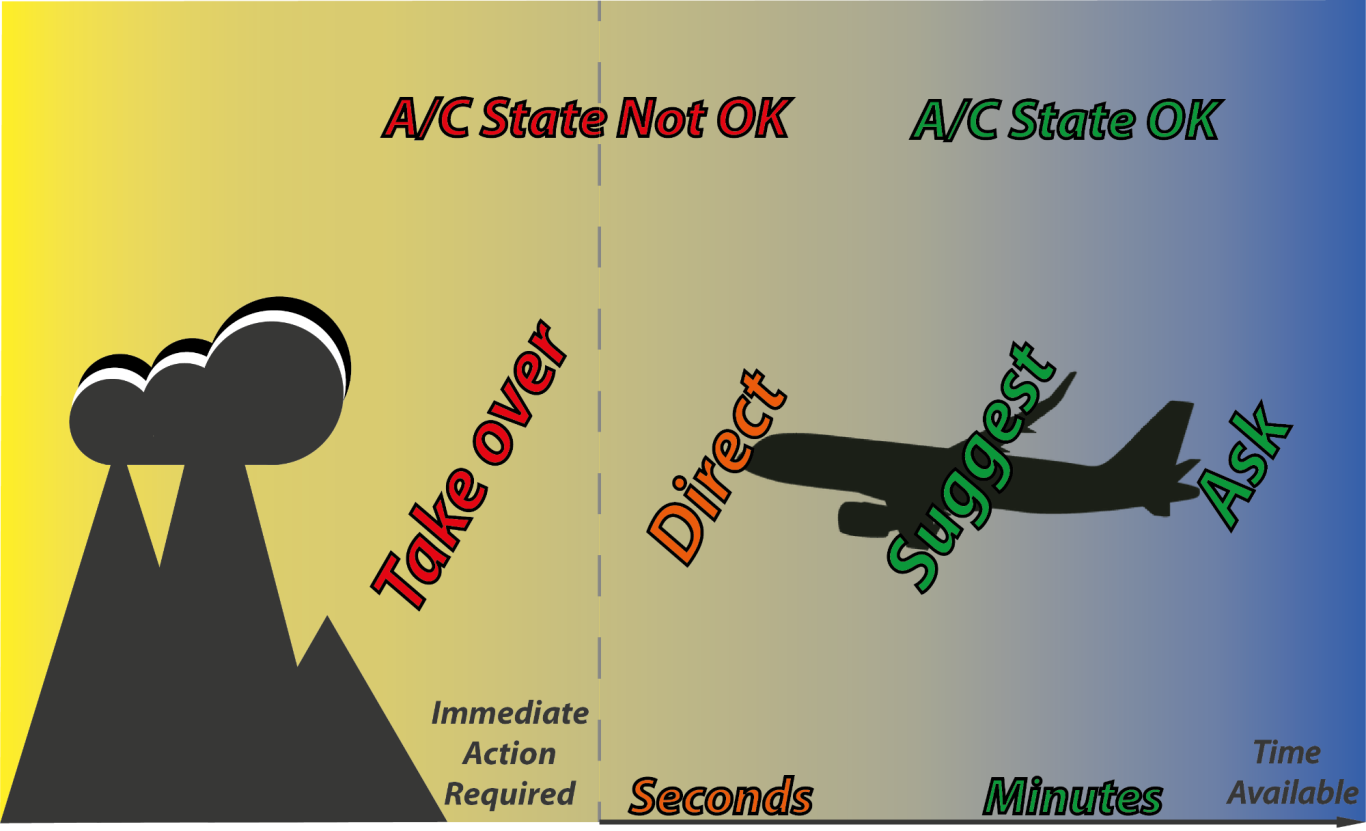
Intervention models are an essential part of effective intervention training. An effective model will provide simple and easily interpreted guidance to monitoring pilots, as can be seen below. This model considers two factors - aircraft state and time - and suggests a process of first asking, then suggesting, directing and, in an immediate emergency, taking over:
Aircraft State
Aircraft state is whether the aircraft is in a safe situation, in terms of energy and flight path, now and in the near future. For example, heading toward terrain with, or without the EGPWS caution “Terrain ahead” would represent ‘Aircraft State Not OK’.
Time
Ask, suggest and direct all require time for the pilot flying (PF) to hear the intervention (this is not guaranteed), process it (startle and cognitive overload may cause a delay), decide on corrective action and then act. This takes time, perhaps many seconds or longer, hence the requirement for no time pressure or at the very least, time available. If the aircraft state is OK (safe situation now and in the near future) and there is clearly plenty of time then ask or suggest could be used. For example, in cruise deviating around weather; “What is your plan to avoid the weather ahead?” Or, “I suggest we request an offset 30 miles left of track due to the weather ahead.”
When the aircraft state is not OK, in choosing whether to direct or take over the pilot monitoring (PM) must clearly understand how much time is available for the PF to receive a direction, process it and then act. This is not always obvious and a common error in both intervention training and operational intervention is incorrect perception of available time. Usually you have less time than you think.
A common error in both intervention training and operational intervention is incorrect perception of available time. Usually you have less time than you think.
An instructor training session in 2009 included a series of full-flight simulator exercises to teach the fine line between ‘time available’ and ‘immediate action required.’ One exercise was a takeoff from a performance limited runway, one in which there is just enough room to takeoff. As the ‘aircraft’ accelerated down the runway, the PF purposely did not raise the nose when the PM called “rotate”. Many monitoring pilots called “rotate” a second or third time before finally taking over. As so much runway had been used up during the delayed intervention, the resultant vertical clearance from the ground and obstacles passing the end of the runway was minimal. The clear learning point from the exercise was during critical phases of flight, takeover early. Although the exercise was for instructors such skills are equally important for all pilots, even the most inexperienced.
To help assess if there is available time for the PF to react, the PM could consider the following:
1. Phase of flight: Taxi, takeoff, climb at low level, approaching a level off, approach and landing are all critical phases due to the potential proximity of other aircraft and the ground. Pilots have less time to intervene, as in the takeoff exercise just described.
2. Alertness of the crew in general: Mental states that affect alertness, especially sleepiness or fatigue, make reaction times longer.
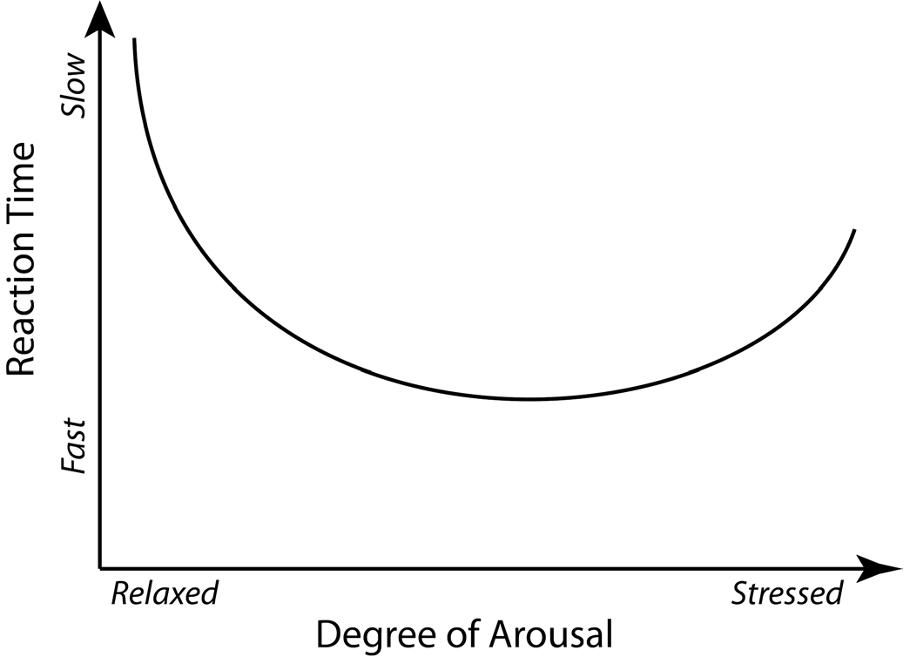
3. Arousal: If the PF is too relaxed, reaction times are longer. As arousal increases, such as during a descent and approach, reaction times become shorter. However, if workload increases, perhaps due to unexpected air traffic control requirements and/or having too much speed and height, reaction times become longer again due to stress.
4. Choices of action: Reaction time slows with the number of choices the PF has. Placing this in context, if the PM calls “speed” on final approach (this is a direct intervention – code for “You are too fast or slow, you need to decrease/increase thrust”), the available choices are:
• Alter thrust
• Lower the landing gear
• Deploy or stow the speed brakes
• Lower the flaps
• Combination of the above
Having to choose between two or more actions, for example using speed brake or lowering the landing gear, will increase reaction time.
5. Distraction: Having many competing tasks increases reaction time. A simple distraction such as an unexpected ECAM/EICAS alert, unintelligible ATC call or an unexpected call from the cabin crew can have a significant adverse effect.
6. Situation Awareness (SA): The lower the SA of the PF the longer the time to react to a stimulus. A PF with low situation awareness does not anticipate an intervention. When the PM speaks up, it takes time to comprehend what is being said and why it is important.
Additional (Human) Factors
Some airlines use trigger words for use when the PF is not listening to the PM. Phrases such as “I am uncomfortable” or “I insist” can be useful to alert the PF that it is time to listen. It could be especially useful for First Officers when faced with an unreceptive Captain. However, in the absence of empowerment to take over and in cultures with a high cockpit gradient, such interventions will still be unreliable.
Pilots can improve the likelihood that their actions will be monitored closely by inviting intervention when briefing their crew for a flight, departure or approach. Especially for a senior pilot, showing humility and openness to intervention sets an atmosphere of cooperation and trust and reinforces the mantra that it is not who is right that matters, but what is right. It follows that a pilot who monitors the flying pilot effectively will be likely to intervene more effectively.
During the busy arrival and departure phases of flight, the PM has many competing tasks such as performing checklists, changing radio frequencies, selecting landing gear and flaps and making radio calls. A common finding after an incident is that the PM could see something happening but was too busy to intervene. Before responding immediately to a PF command such as "Landing checklist", or a frequency change, PMs should first ask "Is the aircraft state OK?" If not, intervene first.
Before responding immediately to a PF command, PMs should first ask "Is the aircraft state OK?" If not, intervene first.
Crews should further improve intervention readiness by covering flight controls, ready to take over during takeoff and landing. This is a practice where the monitoring pilot keeps hands on the control column or sidestick in readiness for immediate takeover if necessary. The importance of this can be illustrated by an event that took place on 20 March 2001 during an Airbus A320 take off from Frankfurt Main Airport. The Captain’s sidestick had been inadvertently cross-connected by maintenance action prior to the flight. Due to turbulence after takeoff, the left wing dipped slightly. The Captain, as PF, applied right sidestick to correct, but due to the cross-connected wiring the aircraft banked further left reaching 22 degrees left bank before the First Officer took control. Fortunately, the First Officer’s sidestick was wired correctly but the left wingtip narrowly missed contact with the ground; had it done so the most likely outcome would have been a catastrophic accident.
Imagine yourself in the place of that flight crew. On an otherwise normal flight, with no particular need for extra vigilance, suddenly the aircraft is behaving in an unexpected way. The PF is understandably confused and shouts "I can do nothing more!" As PM, would you be ready to take over and save the aircraft? For sure, if you have your hand on the sidestick and are mentally prepared to intervene, your reactions will be faster. One can only admire the actions of the First Officer in this event.
On long range flights, augmenting pilots form part of the crew, allowing the takeoff and landing pilots to rest during the long cruise phase. Augmenting pilots observing a departure or approach from the jump seat at the rear of the flight deck have the same role as the PM except of course they cannot take over. However, augmenting pilots have the advantage of having no competing tasks – in contrast to the PM, their sole purpose during critical phases is monitoring. Therefore, augmenting pilots should also be empowered to intervene when needed as this could help avoid an incident if both the PF and PM miss something.
Technical Considerations
The act of taking control unexpectedly has associated risks which should be discussed when training intervention.
1. When a take over intervention is made, it is likely the ex-PF will be startled and ineffective for several seconds or longer. A pilot who intervenes and takes control should be prepared for minimal support in the immediate period afterwards.
2. There should only be one pilot in control of an aircraft at any given time. If two pilots think they have control unexpected outcomes are virtually guaranteed. This is why a standard control transfer call is so important. For example, “I have control/ you have control” formalizes the transfer.
3. With Airbus fly-by-wire technology, control transfer becomes even more important due to the algebraic summing of any two simultaneous control inputs. The sidestick pushbutton must be pressed and held to ensure priority to the pilot pushing the button and to isolate the other pilot’s sidestick. However, the sidestick pushbutton has another more common purpose, to disconnect the autopilot when transitioning to manual flight. For this purpose the button is pressed only momentarily. You may therefore understand how pilots accustomed to using a button momentarily would fail to remember to press and hold it when taking over, especially given the task pressure that would undoubtedly prevail at the time. This potential trap is another good reason to train interventions in a simulator.
Conclusion
Among the names on the memorial wall in the Margalla Hills are those of the two pilots, men who were singled out for their failings on the flight. Yet neither left home that morning with the intention of crashing. They carried out their duties as best as they could, accounting for the prevailing conditions and their own, very human, frailties.
The accident report prompts many questions not addressed in this article however, it is inescapable that had the Captain adhered to establish procedures then the accident would not have happened. Equally had the First Officer been more confident in his own ability and felt empowered to intervene disaster could have been averted.
We know that to err is human and therefore pilots will continue to make errors that require correction by their colleagues. Training pilots about how to intervene, when to intervene, and considering factors that might affect their ability to do so, could save many lives in the future.
Notes
1. The primary reference for this article was the Pakistan Civil Aviation Authority (Safety Investigation Board) Investigation Report to Air Blue Flight ABQ-202. Available at https://skybrary.aero/sites/default/files/bookshelf/3218.pdf
2. The reaction time paragraphs lent on an excellent compilation of research published by the Californian Training Institute available at https://www.hptinstitute.com/wp-content/uploads/2014/01/Factors-Affecting-Reaction-Time1.pdf. Specific citations are within this document.
3. The ASK-SUGGEST-DIRECT-TAKEOVER intervention model may be found in the IATA Guidance Material for Improving Flight Crew Monitoring 1st Edition, P49; Https://img1.wsimg.com/blobby/go/3c903b74-1bba-4b83-8174-471aec6e9862/downloads/IATA%20GM%20Flight-Crew-Monitoring.pdf?ver=1606318715552. The model itself was an adaptation of the HINT-SUGGEST-DIRECT-TAKEOVER model introduced by the author in 2009, intended for instructors. It was subsequently updated in 2014 by substituting 'hint' with 'ask'. Associated graphics and explanation both in the IATA document and this article are by the author.
4. The photograph of the Margalla Hills, taken by 'Obaid747' was obtained from Wikimedia Commons under the following licence https://creativecommons.org/licenses/by-sa/3.0/deed.en and subject to minor cropping.
5. The views and opinions expressed in this article are those of the author
Leave your feedback here. Name and email optional.
E-mail: info@mitchellaviation.com
Address: 71-75 Shelton Street, Covent Garden, London, WC2H 9JQ, United Kingdom